
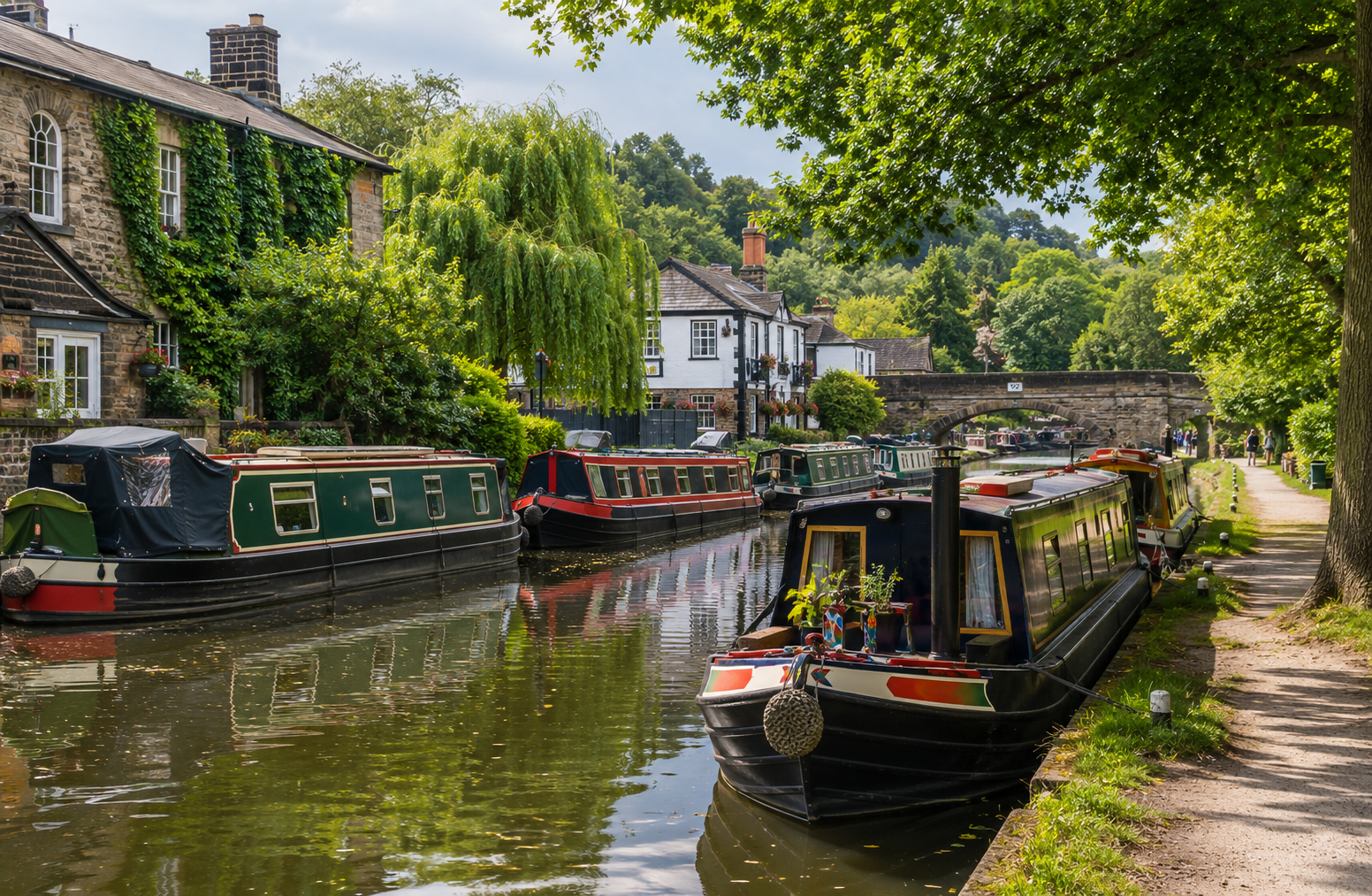
It is estimated that there are up to 30,000 people living on a boat full-time on the rivers, canals, and coastlines in the United Kingdom. Living aboard a boat on the United Kingdom’s inland waterways requires a clear understanding of the distinction between mooring types and the regulations that govern them.
For those who do not intend to continuously cruise, securing a long-term mooring is generally essential. These moorings range from fully serviced berths within private marinas to more basic spaces managed by the Canal & River Trust (CRT) along the towpath network. The CRT currently oversees approximately 3,600 long-term moorings across more than 300 locations, representing roughly 11% of the total mooring supply throughout the system.
However, a long-term mooring should not be confused with a residential mooring. Residential moorings carry the necessary planning permissions that allow a boat to be occupied as a primary residence on a permanent basis. These permissions are typically granted by local authorities and offered through select marinas, landowners, or designated CRT sites. Without residential status or explicit approval from the relevant authority, a long-term mooring is generally not intended to serve as a full-time home, regardless of how well-equipped the vessel may be for year-round living.
An alternative approach is to operate under the CRT’s Continuous Cruiser framework. Under this arrangement, boat owners do not maintain a permanent home mooring and are instead required to navigate the network on an ongoing basis, moving to different locations at regular intervals. This option permits full-time life aboard and is embraced by many liveaboards seeking a more mobile lifestyle.
Continuous cruising, however, is not suited to every situation. Individuals with fixed-location employment, school commitments, or a preference for residential stability may find the ongoing movement requirements challenging. Weather, logistics, and access to services can also become important considerations.
For prospective liveaboards, the mooring question should be addressed before purchasing a vessel. Whether pursuing a designated residential berth or embracing the flexibility of continuous cruising, understanding the practical and regulatory realities of each path is a critical step in building a successful floating lifestyle.
Leave a Reply